7 Terrifying Facts About the Giant Soldiers in The Odyssey: The Ultimate Laestrygonians Guide
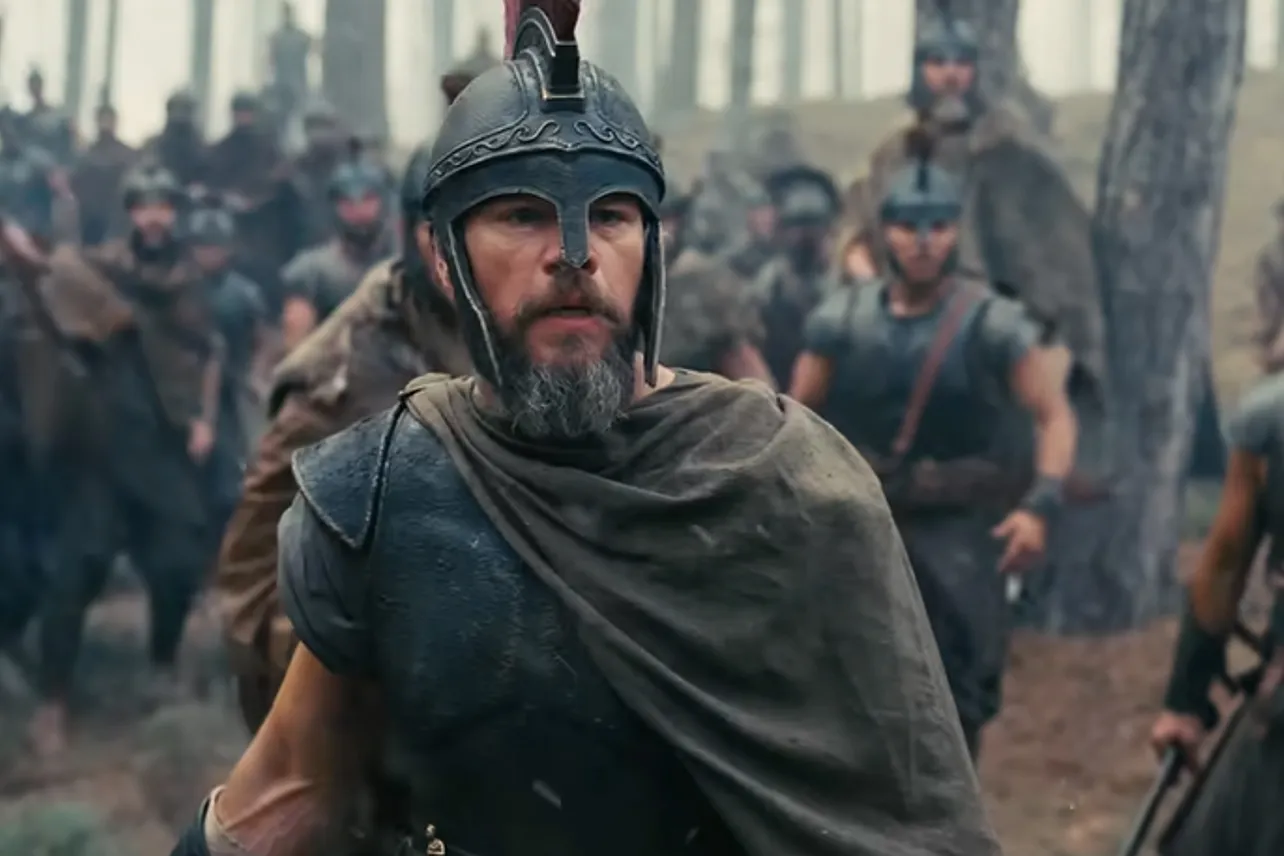
Giant Soldiers in The Odyssey are among the most terrifying creatures featured in Christopher Nolan’s epic adaptation of Homer’s classic tale. Known as the Laestrygonians, these towering man-eating giants deliver one of the film’s most shocking sequences. Here’s everything you need to know about their origins, their role in Greek mythology, and why Nolan included them in his blockbuster.
The Giant Soldiers Are the Laestrygonians
The armored giants seen in The Odyssey are the Laestrygonians, a legendary race of man-eating giants that first appeared in Homer’s epic poem, The Odyssey.
After escaping the Cyclops, Odysseus and his surviving men land on what seems to be a peaceful island, hoping to find food and shelter. Instead, they encounter what appears to be a lone soldier. As they approach, they realize the figure is actually a giant child. Moments later, enormous warriors emerge from the forest and launch a devastating attack.
The terrifying ambush wipes out nearly all of Odysseus’ remaining fleet, leaving only his own ship to escape.
Were the Laestrygonians in Homer’s Original Odyssey?
Yes.
The Laestrygonians appear in Book X of Homer’s The Odyssey. According to the ancient poem, Odysseus sends scouts to explore an unfamiliar island. They encounter the daughter of King Antiphates, who leads them to the royal palace.
Inside, they discover that the king and his family are giants. King Antiphates immediately calls for the other Laestrygonians, who attack the Greeks, hurl enormous rocks at their ships, and devour many of Odysseus’ men.
Only Odysseus’ own vessel escapes the massacre, making it one of the greatest losses during his journey home from the Trojan War.
Nolan Adds His Own Horror Twist
While the giant attack comes directly from Greek mythology, Christopher Nolan adds several original visual ideas to heighten the suspense.
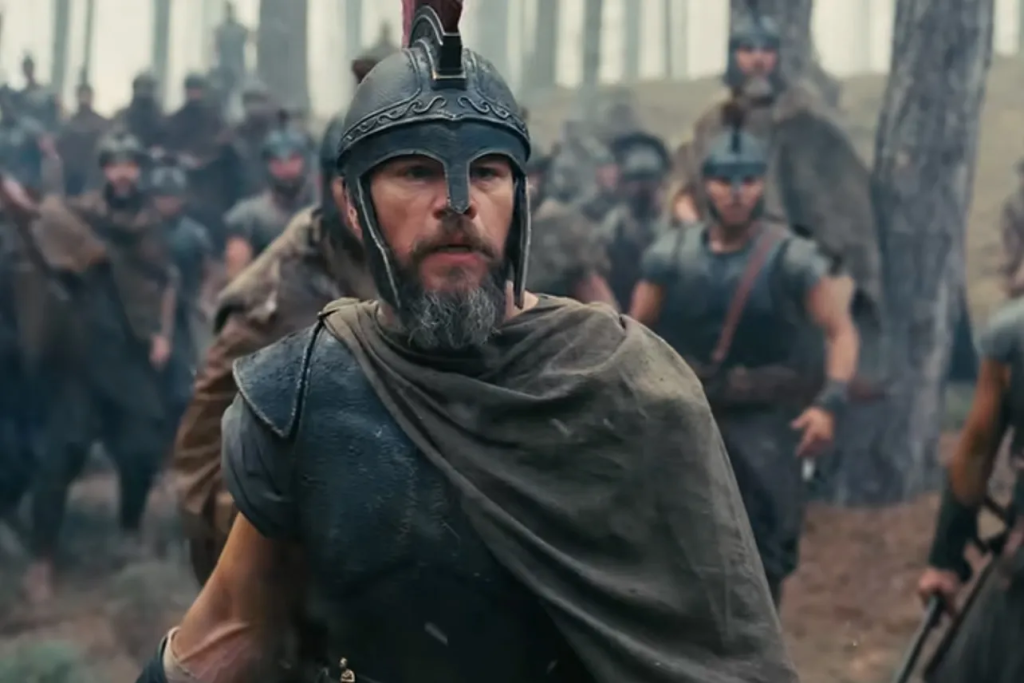
In the film, the surrounding forest appears to shift and close in, trapping Odysseus’ soldiers before the giants hunt them down. These moving trees are not part of Homer’s original story, but they transform the sequence into one of the movie’s most unsettling and visually memorable moments.
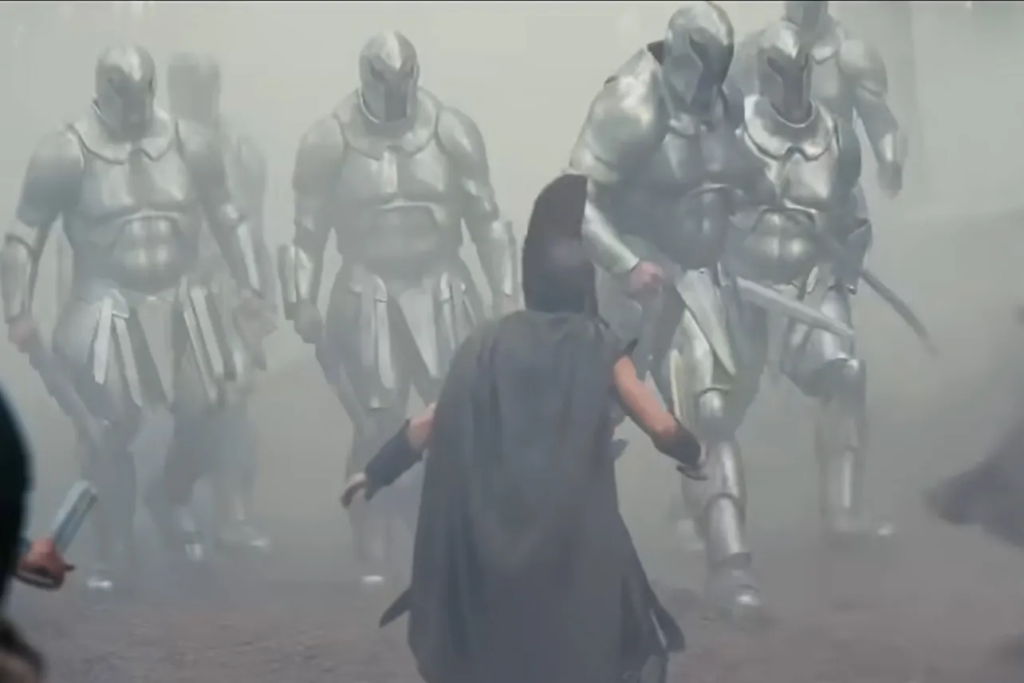
Rather than simply recreating the ancient text, Nolan blends mythology with psychological horror, making the encounter feel unpredictable even for viewers familiar with the original epic.
Why the Laestrygonians Matter
The Laestrygonians are more than just another monster standing in Odysseus’ way.
Their attack reinforces one of the movie’s central themes: the collapse of hospitality and trust.
Throughout ancient Greek culture, travelers were protected by the sacred tradition of xenia, often described as guest-friendship or divine hospitality. Strangers were expected to receive food, shelter, and respect before being questioned.
Odysseus arrives expecting that sacred custom to protect him. Instead, he and his crew are treated as prey.
The encounter highlights how the brutality of the Trojan War has changed the world around Odysseus. Rather than finding kindness, he repeatedly encounters violence, suspicion, and revenge during his journey home.
The Connection to Poseidon
The Laestrygonians also have a mythological connection to Poseidon, the sea god.
Earlier in the story, Odysseus blinds the Cyclops Polyphemus, who is Poseidon’s son. Enraged, Poseidon curses Odysseus’ voyage, ensuring that every step toward home becomes increasingly dangerous.
The encounter with the Laestrygonians continues that pattern, as Odysseus faces yet another enemy tied to the sea god’s influence.
Final Thoughts
Christopher Nolan’s version of the Laestrygonians stays true to the spirit of Homer’s epic while expanding the mythology with haunting new visuals. Their brutal attack represents one of Odysseus’ greatest defeats, costing him nearly his entire fleet and emphasizing how dangerous his journey has become.
For viewers unfamiliar with Greek mythology, the giant soldiers may seem like an unexpected addition. In reality, they’re one of the oldest and most memorable threats in The Odyssey, proving that some of the epic’s most terrifying monsters existed long before modern fantasy films.